Destroyed vs. damaged: how satellite analysts set the structure-damage threshold
If you've ever had to defend a structure count to a pooled-fund reviewer, you already know the question comes fast: how did you decide this one was "destroyed" and that one was only "damaged"? The answer matters more than it should, because the categories drive the number that drives the ask. Get the thresholds wrong and your appeal either overstates the need or underfunds it.
Most damage assessments built from very-high-resolution optical imagery use some version of a four-tier split, even when the labels differ slightly between organizations. It's not a formal international standard so much as a convention that's proven workable enough to stick.
The four categories, read from overhead
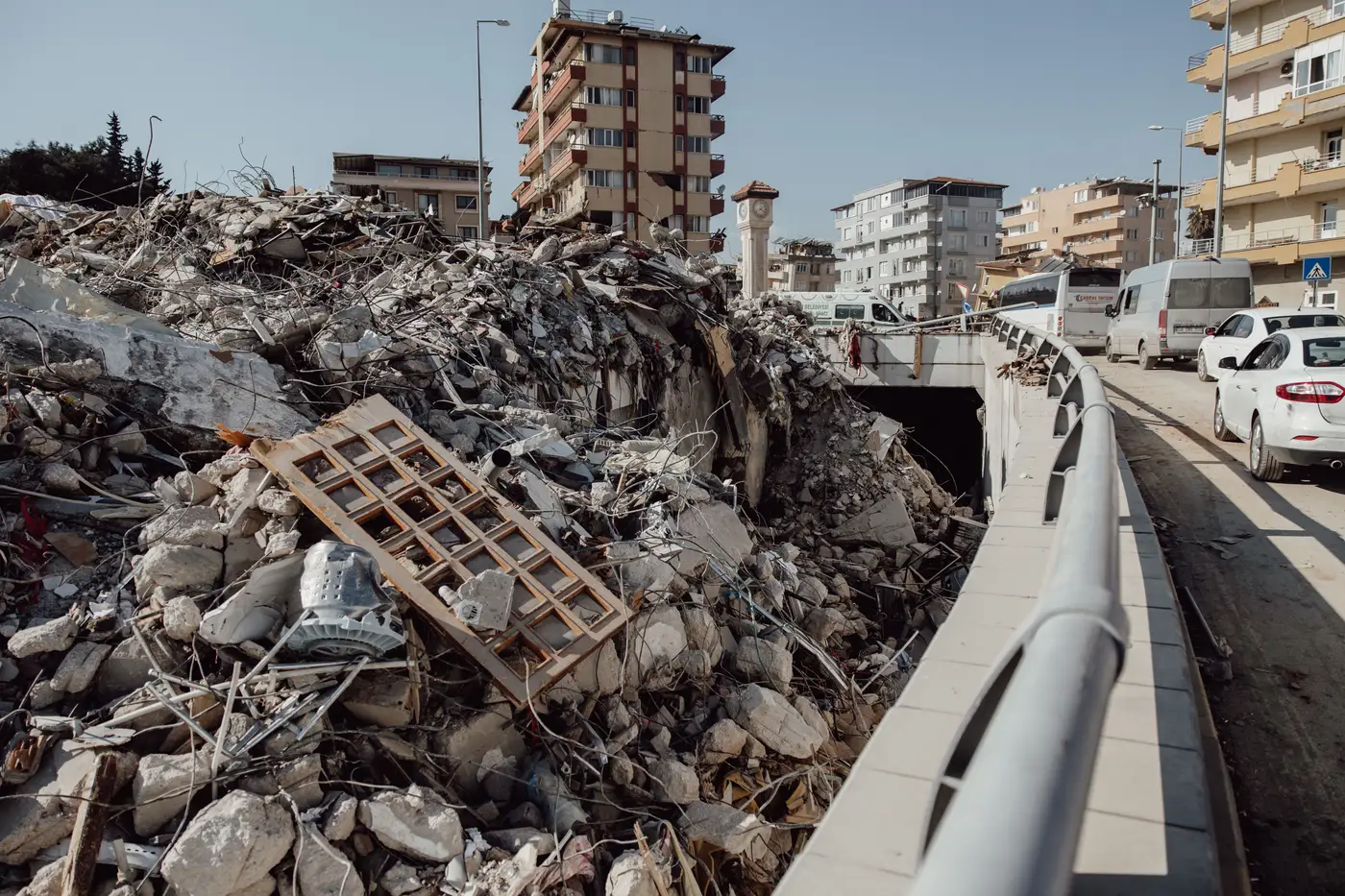
Destroyed. The roof structure is gone or has collapsed inward, walls have failed, or the footprint is now indistinguishable from rubble. From straight overhead, you're often looking at a debris pile with no coherent roofline left, sometimes with visible wall fragments lying flat around the former footprint.
Severely damaged. Part of the roof is missing or caved in, but enough of the structure's outline survives that you can still tell it was a building, not a debris field. Partial collapse of one section while another section stands is the classic case. Tarping over a collapsed section, if visible, is a useful secondary cue. It tells you someone's living there now, not how bad the structural damage is underneath.
Moderately damaged. The roofline is intact or nearly so, but you can see damage: missing roofing material, scorch marks, a collapsed outbuilding next to an intact main structure, visible cracking where imagery resolution allows it. The building is standing and usable, though it may need repairs.
No visible damage / not assessed. Self-explanatory, but worth stating because an appeal built only on visible damage categories implicitly undercounts anything imagery can't see, like structural cracking inside a building that looks fine from above.
Where the line actually gets argued
The destroyed/severely-damaged boundary is where reviewers push back hardest, and for good reason. A few things make it genuinely ambiguous rather than just a judgment call.
Nadir versus off-nadir angle changes what you can see. A roof that reads as intact from directly overhead can turn out to have failed walls once you get an oblique look, or vice versa. One image acquisition, one angle, is what most event-driven deliveries are working with.
Debris from a destroyed structure next door can sit on top of a merely damaged one, making its footprint look worse than it is. Dense urban blocks and informal settlements are where this happens most, because structures share walls or sit close enough that collapse debris spreads.
Timing relative to the event matters too. Imagery captured a day after a storm looks different from imagery captured a week later, once people have started clearing debris or tarping roofs. A structure count is a snapshot of one acquisition window, not a running total.
A structure that's standing but condemned, structurally unsound in a way invisible from above, won't show up as destroyed in an imagery-based count at all. That's a known gap, not a flaw to paper over. Field verification is what catches it, once teams can get boots on the ground. For an appeal, the imagery-based count is the fast, defensible first number, built to the same category logic reviewers already expect.
That's the actual use case behind a structure-by-structure damage count delivered within days of the event, built to the same categories your allocation tables already expect, so you're not waiting on field teams to get a first number into the appeal.
None of this means the categories are arbitrary. It means a reviewer who asks "how did you call this one destroyed" deserves a specific answer about what was visible in that image, at that angle, on that date. That's exactly the kind of documentation a structure-by-structure count should carry with it.
If your appeal needs that count now rather than after a field mission reports back, that's the gap Humanitarian Damage Assessment is built to close.