Severity classification scale vs. damage grade: what's the difference
Anyone who has sat on a JIAF or MIRA working group has heard both terms thrown around in the same paragraph: severity classification and damage grade. They sound interchangeable. They aren't, and conflating them in a funding appeal is a quick way to get a clarification request back from a reviewer who notices the numbers don't line up with the narrative.
What a severity classification scale measures
A severity classification scale is a needs measure, not a structural one. OCHA's Joint Intelligence Analysis Framework and the broader humanitarian programme cycle run on a five-point scale, from minimal (1) through catastrophic (5), applied to a population group in a given area. It answers one question: how bad is the situation for the people living there, across sectors like shelter, food security, health, and protection. The inputs come from cluster assessments, key informant interviews, secondary data review, and sometimes satellite-derived indicators, rolled up into a single score attached to an admin unit or population group. That score is what pooled funds like the CERF and country-based pooled funds use to rank where money goes first.
Severity is composite and judgment-based by design. Two analysts working the same inputs can land on adjacent severity scores and both be defensible, because the scale is measuring a condition across a population, not counting objects.
What a damage grade measures
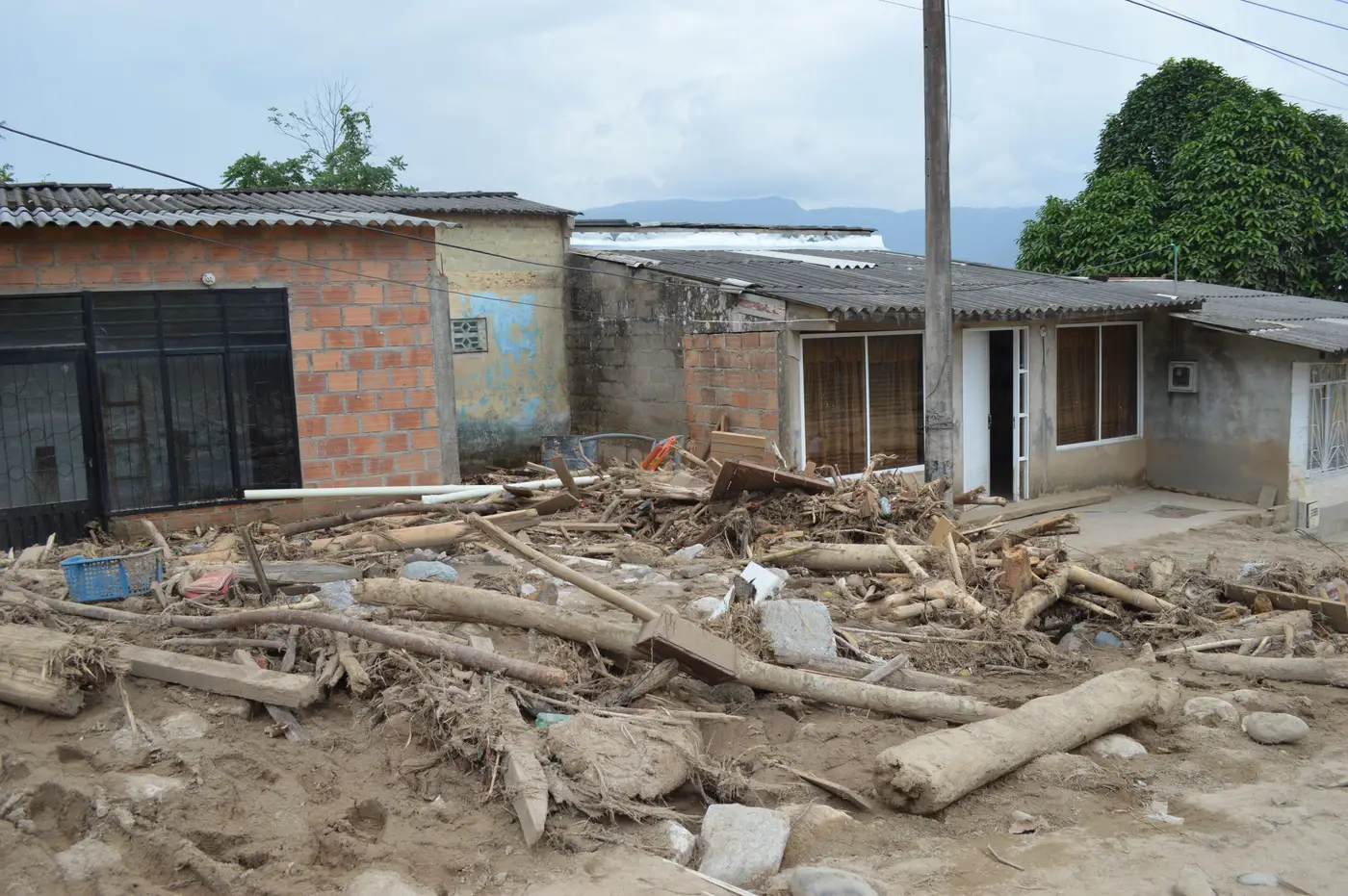
A damage grade is a structural assessment. Schemes like EMS-98, or the UNOSAT categories of destroyed, severely damaged, moderately damaged, and possibly damaged, classify individual buildings by observable physical condition, read off imagery or a site visit. Grading a structure means reading the roof, the walls, and the footprint against a grading definition, structure by structure, regardless of who lives there or how exposed the surrounding population is.
That narrower scope is exactly why a damage grade can be produced fast and from a single data source. It's a count of physical condition, structure by structure, over an affected area. On its own it doesn't tell a donor how severe the humanitarian situation is. It tells them how many structures in a given footprint fall into each damage category, which is a related but separate claim from severity.
Where appeal drafts mix the two up
The confusion shows up at drafting time when a structure damage count gets written up as if it were a severity finding, or the reverse, when a severity 4 classification gets cited as if it proved a specific number of destroyed buildings. Neither substitution holds. A severity score is an aggregate judgment about a population's condition, built from many inputs over time. A damage grade is a direct observation about one structure at a time, produced quickly from imagery without waiting on the full set of inputs a severity classification needs.
The two are meant to sit side by side in an appeal, not stand in for each other. A reviewer reading a shelter sector ask wants to see the severity classification that justifies prioritization, and a structure-by-structure damage count that backs the ask with something countable. A severity score alone invites the question of how many buildings that means in practice. A structure count alone can't say how severe the broader situation is. Put them next to each other and the ask holds up to scrutiny; leave one out and it doesn't.
That's the gap a structure-level damage count from imagery is meant to close: a standardised, event-affected count of buildings by damage grade, delivered on the timeline an appeal narrative actually needs, without waiting for field teams to reach every settlement. If a funding ask needs that count behind it, Humanitarian Damage Assessment is built to produce exactly that.